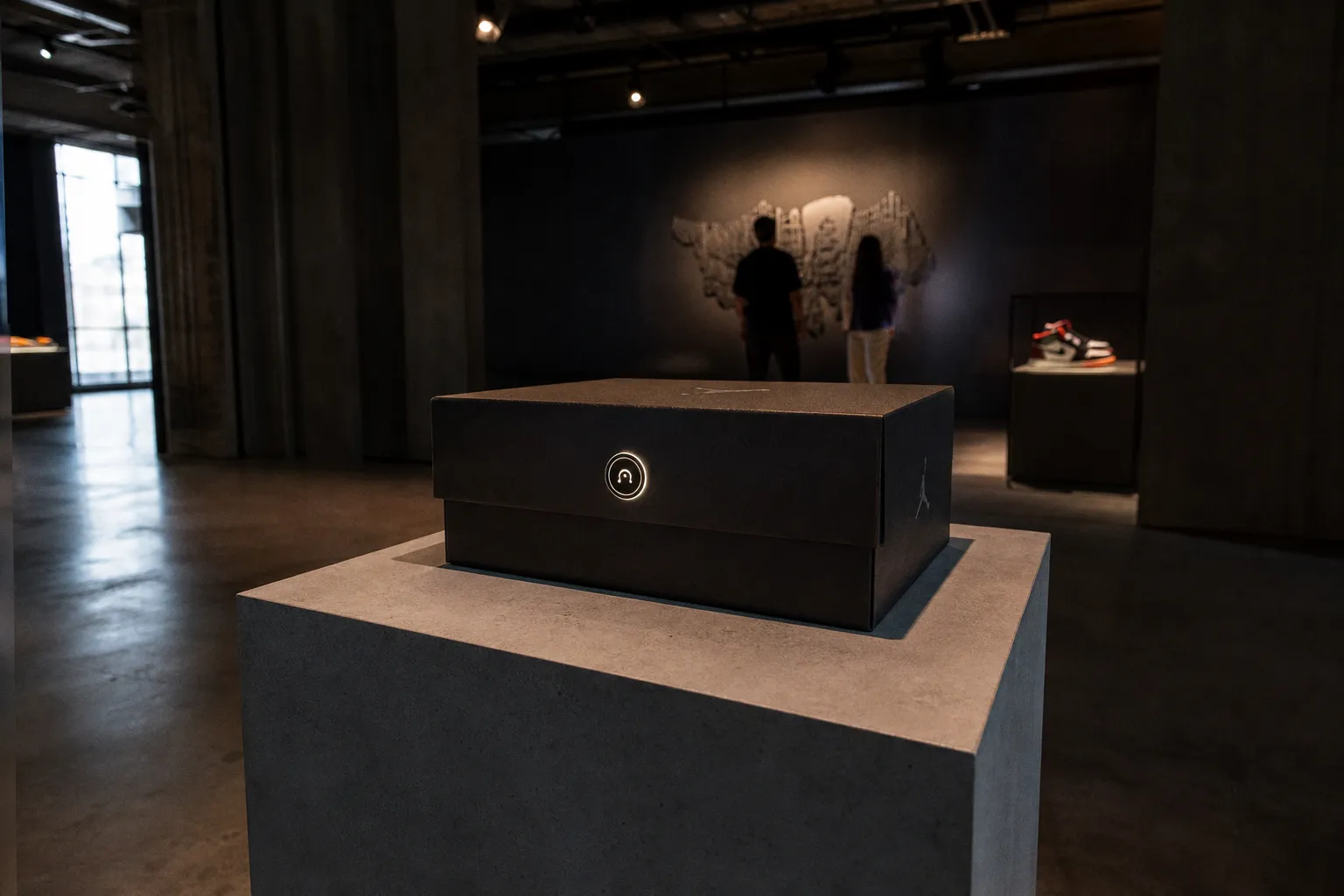
Somewhere inside that sole sat an encrypted NFC chip, registered to the specific pair in my hand. I tapped it with my phone and watched the screen populate with provenance data, an authentication certificate, and, depending on which pair I'd been handed, the possibility of a digital twin NFT waiting on the other end.
That little moment — a thumb on rubber, a phone screen lighting up — is the clearest distillation of phygital retail I can offer. Not a metaverse manifesto, not a speculative token chart, but a tangible object with a chip inside it, speaking to a blockchain somewhere. The technology has been creeping into luxury boutiques for years. In 2025, it's no longer a novelty; it's table stakes for any brand that wants to prove what it's selling and stay ahead of regulators who are about to make it mandatory.
The Mechanics of NFC Integration in Luxury Goods
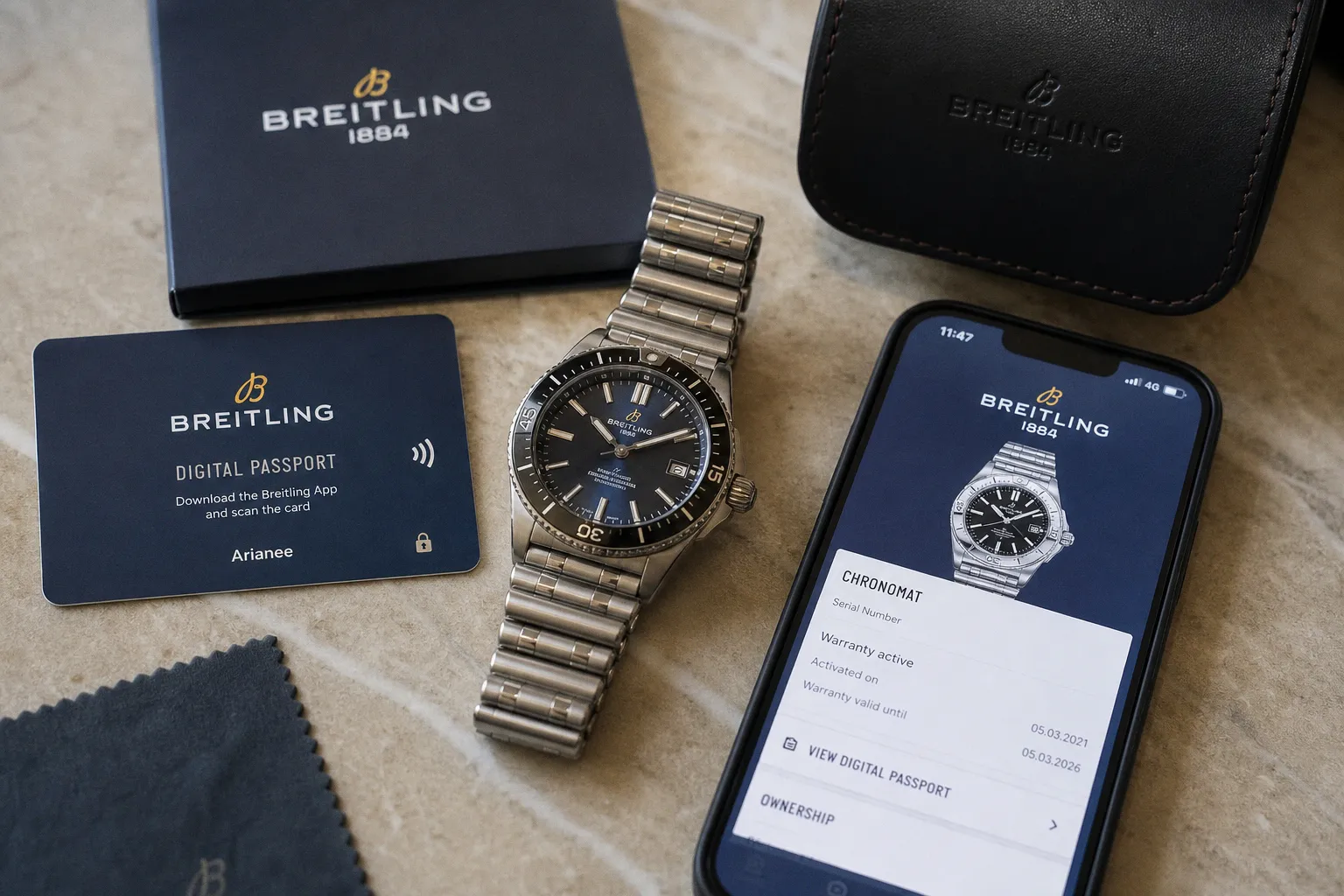
Near Field Communication chips are passive circuits — no battery, no moving parts, just a coiled antenna smaller than a fingernail. When a phone's NFC reader gets close enough, it briefly powers the chip and reads its unique identifier. That identifier resolves, via the brand's app or a web portal, to a cryptographic certificate stored on a blockchain.
Three details separate a luxury-grade NFC chip from the contactless chip in a credit card. First, the data is usually encrypted — the identifier alone won't authenticate anything without the brand's private key. Second, the identifier maps to an immutable record, most often on a permissioned chain like Aura or a public chain like Ethereum, which means the certificate cannot be quietly rewritten after the fact. Third — and this is where the "phygital" label earns its keep — the chip can do considerably more than prove authenticity. It can deliver a digital twin, register a warranty, open a post-purchase loyalty portal, or unlock a wearable version of the same product in a virtual environment.
The QR code remains the cheaper alternative. Mugler, for example, partnered with Arianee in November 2023 to embed blockchain-backed Digital Product Passports into its Spiral Curve handbags, accessed by photographing a QR code sewn inside the lining. QR is inexpensive, doesn't require NFC hardware, and is difficult to remove without visibly damaging the bag. The trade-off is plain: a QR code is trivially easy to copy and reprint, while an NFC chip embedded under a sneaker sole or inside a leather panel requires considerably more effort to clone without industrial equipment.
The chip is the new hangtag. The blockchain is the new certificate of authenticity. The customer just wants to know their bag is real — and, increasingly, what it did before it got to them.
From Dior to Mugler: Three Approaches to Phygital Implementation
I examined three recent luxury deployments side by side — one in sneakers, one in handbags, one in ready-to-wear — and the differences in approach are more revealing than the similarities.
| Implementation | Brand | Product | Trigger | Digital Asset | Authentication Method |
|---|---|---|---|---|---|
| B33 Sneakers (2023) | Dior | Sneaker, retail $1,000–$1,100 | NFC chip in right sole | Ethereum NFT digital twin (470 limited pairs only); standard pairs use chip for verification only | Encrypted NFC |
| Spiral Curve (2023) | Mugler (with Arianee) | Handbag | QR code sewn inside bag | Blockchain-backed Digital Product Passport | QR scan |
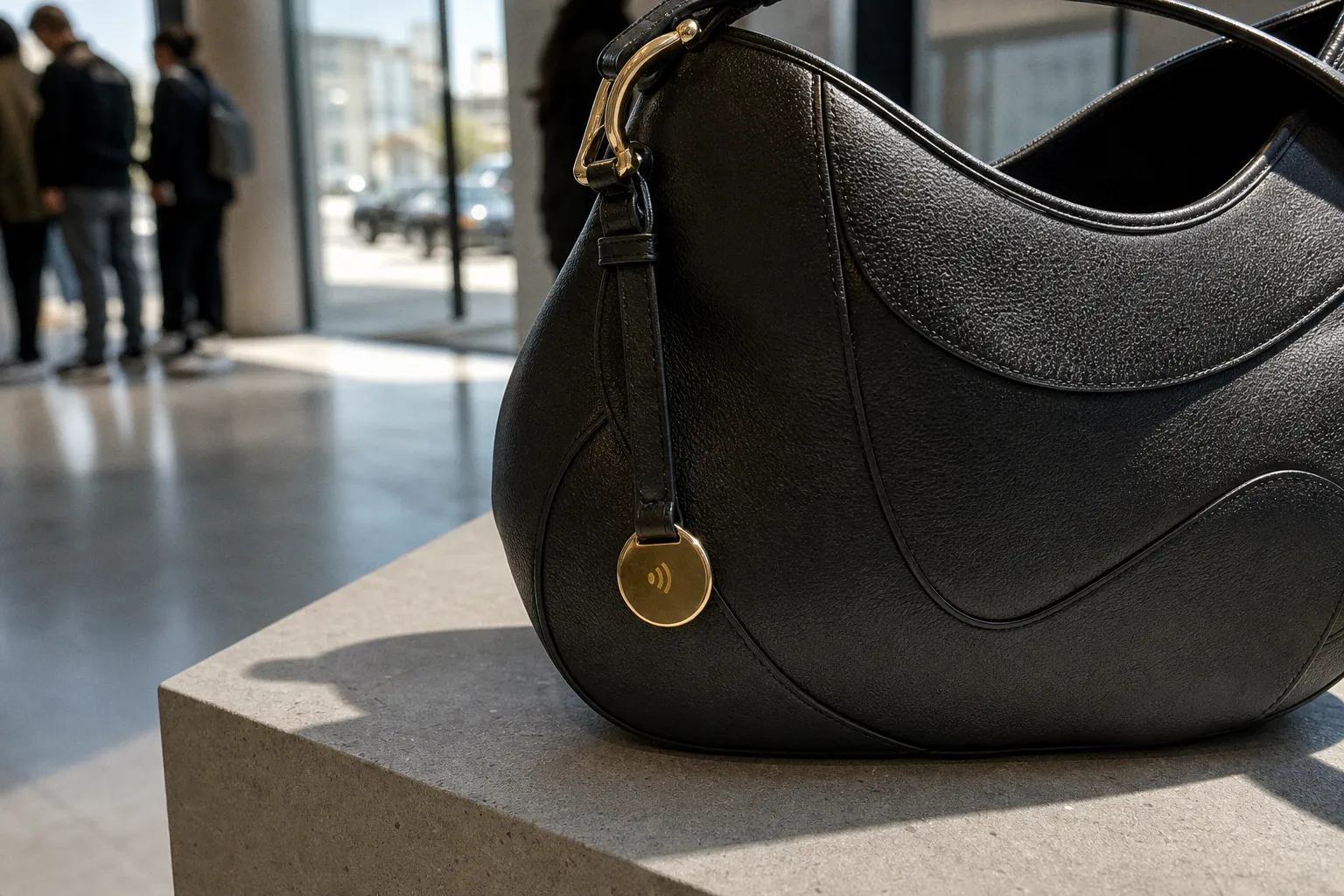
| Di Bag | Tod's (with Aura) | Personalized handbag | NFC-enabled Digital Product Passport | Aura blockchain record | Encrypted NFC |
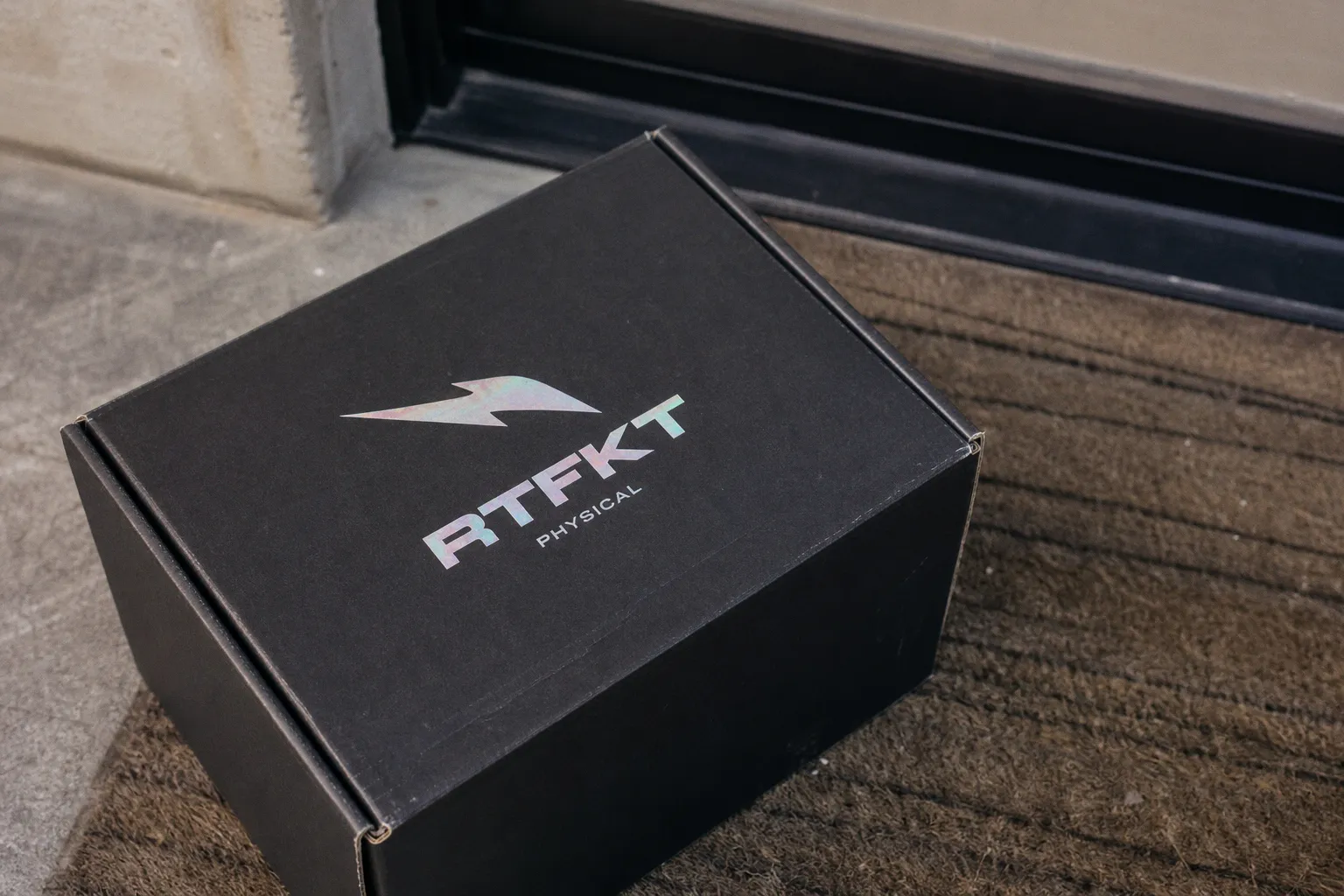
| AR Genesis Hoodie (2022) | RTFKT × Nike | Hoodie | NFC chip in garment | AR-enabled digital twin; brand announced its January 2025 shutdown | Encrypted NFC |
The Dior B33 is the most culturally legible of these drops because it tied a limited physical run to a verifiable digital artifact — 470 pairs, no more. The standard B33 carries the same NFC chip but uses it strictly for authentication, which is a quietly smart commercial decision: it lets every buyer participate in the provenance story without forcing every buyer into the NFT market. Mugler's QR approach prioritizes accessibility over tamper resistance — anyone with a smartphone can verify, but a counterfeiter can lift the code with a photograph. Tod's leans on the Aura consortium's shared infrastructure, which is a different bet entirely: the authentication is only as strong as the network behind it. And the RTFKT × Nike AR Genesis Hoodie, launched in July 2022, was an early and ambitious attempt to make a digital twin feel as desirable as the physical garment — a project that, with the brand's announced shutdown, serves now as a useful cautionary footnote.
Aura, Prada, LVMH, and the Shared Infrastructure Behind the Seams
The Aura Blockchain Consortium is the quiet infrastructure layer most consumers will never see. Founded by LVMH, Prada, OTB, and Cartier, it operates a permissioned blockchain purpose-built for luxury provenance. The consortium has registered over 40 million products across its member brands using a combination of NFC chips and QR codes.
The logic behind the consortium is straightforward: no single luxury house wants to be the custodian of a proprietary chain that no one else trusts, and no customer wants to download seventeen different apps to verify seventeen different brands. Aura pools the verification infrastructure while letting each member brand control the customer-facing experience. For a Tod's client scanning a Di Bag, the tap resolves through Aura's chain but lands on a Tod's-branded interface — a small detail that preserves brand ownership while sharing the technical cost.
This kind of consortium thinking is becoming a model for how mainstream retail approaches digital infrastructure at scale. Watching how a heritage luxury network coordinates chip-level authenticity has obvious parallels with the way large multi-category retailers are now balancing physical footprint with digital growth — a tension explored in recent coverage of Walmart's retail scale and digital phase, where the same balancing act between legacy operations and new digital infrastructure plays out at a different altitude. Aura's 40-million-product figure is not a vanity metric; it is a proof point that shared infrastructure can scale without flattening the brands that depend on it.
The 2027 Mandate: Digital Product Passports and the EU's ESPR
The regulatory pressure behind all of this is arriving faster than most luxury executives would like to admit. The European Union's Ecodesign for Sustainable Products Regulation, or ESPR, will require Digital Product Passports for textiles and apparel, with the delegated act scheduled for adoption in 2027. The Commission's broader DPP work plan stretches through 2030, but textiles are first in line.
What does a Digital Product Passport actually mandate? In practical terms, every textile or apparel product covered by the delegated act will need to carry a machine-readable record covering material composition, repair instructions, recycling pathways, and provenance. For luxury, this overlaps almost perfectly with what the NFC and QR programs are already doing — provenance, material data, chain-of-custody — but it adds a layer of regulatory non-negotiability to a category where provenance has long been a marketing claim rather than a contractual one. The textile-apparel delegated act is scheduled for 2027; the timeline for leather goods, handbags, and other adjacent luxury categories remains unsettled, with the Commission's broader DPP work plan stretching into 2030 and beyond.
This is why brands are deploying chips and codes now, well ahead of any binding obligation specific to their category. The infrastructure is expensive, the consumer education curve is steep, and the technical decisions — NFC versus QR, permissioned chain versus public, which standards body to align with — take longer to settle than the regulation itself. By the time the textile-apparel delegated act arrives in 2027, the brands with functioning systems will look prescient; the ones scrambling to retrofit will look exactly like what they are.
The regulation is the forcing function. The chips and codes are the answer. The customers are along for the ride.
The Counterfeiter's Workaround: Why Anti-Counterfeiting Is a Moving Target
The honest limitation of all this technology is one I felt most clearly looking at a Moncler jacket in a Milan vintage shop. Moncler has used NFC tags and QR codes for anti-counterfeiting verification for years — and yet replicas remain abundant. Counterfeiters have developed workarounds: cloning basic NFC tags, copying QR codes wholesale, sometimes producing convincing packaging that includes counterfeit verification cards. Moncler's response has been technical and ongoing, including moving the NFC chip from the external badge to internal tags that are harder to access without disassembly.
This is the uncomfortable truth the marketing materials tend to gloss over: scanning an NFC tag does not provide absolute proof of authenticity. It provides a strong indication, backed by encryption and a blockchain record — but any security system that lives in the physical world can, in principle, be attacked in the physical world. The chip under the sneaker sole is harder to clone than the QR code in the handbag lining, but neither is impossible, and both require ongoing investment from the brand to stay ahead of the replication curve.
What this means for the consumer is that the technology is a meaningful layer of defense, not a magical guarantee. For the brands, it means the work never stops. RFID and NFC integration in retail environments has been credited with inventory accuracy as high as 99%, which is a different problem from counterfeiting but speaks to the same underlying capability: when you can tag and read every item at scale, you gain leverage over both the supply chain and the secondary market.
The Verdict on Phygital's Market Longevity
After examining the Dior B33, the Mugler Spiral Curve, the Tod's Di Bag, and the broader Aura infrastructure, my read is this: phygital retail has graduated from experiment to expectation. The chip in the sole and the QR code in the lining are not gimmicks layered onto luxury goods; they are becoming part of what luxury goods are. The brands that have invested early — LVMH's consortium play, Mugler's Arianee partnership, Dior's hybrid authentication-plus-limited-NFT model — will be the ones still standing when the EU's 2027 delegated act turns the textile-apparel layer of their infrastructure into a legal baseline.
What I would watch next is whether the digital twin side of these deployments matures beyond novelty. The RTFKT × Nike AR Genesis Hoodie showed what was possible in 2022; the brand's announced shutdown in January 2025 is a useful reminder that the digital layer only holds value if the parent ecosystem can stay alive. Authentic, encrypted provenance is durable. Speculative digital twins, on their own, are not.
The boutique of the next decade will not look radically different from the boutique of today — the same marble floors, the same softly lit vitrines, the same sales associate with a small nod when you crouch to scan a sole. But underneath, every object will be talking to a blockchain. The customer who bothers to listen will know exactly where their bag has been. The customer who does not will, at minimum, own the real thing.
That is the phygital promise, stripped of the jargon: real objects, verifiable stories, tangible utility where it matters and quiet cryptography where it doesn't.