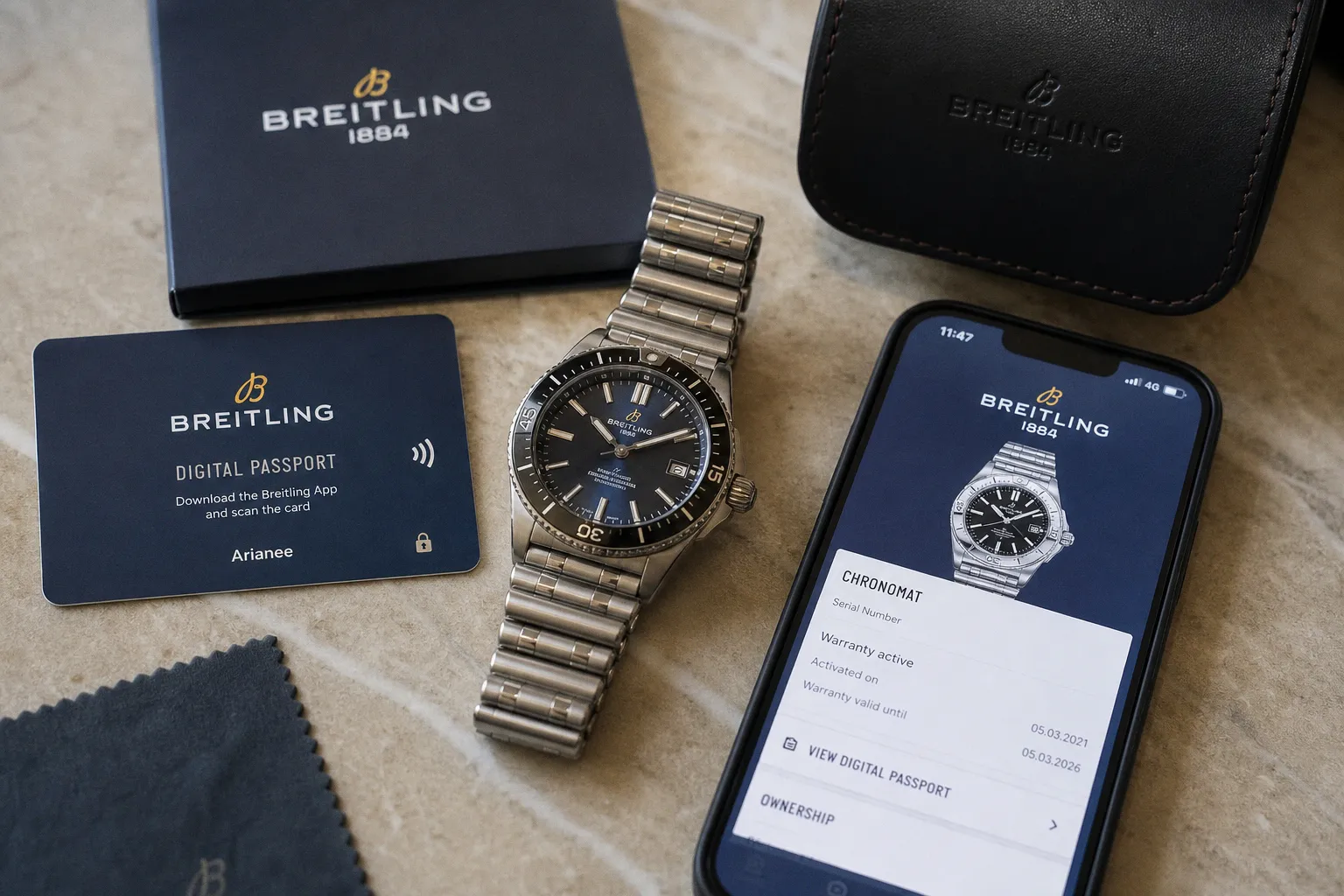
The practical phygital meaning is narrower than the slide-deck version. It is the binding of a physical object to a digital state. A garment, sneaker, watch, bottle, or ticket carries an identifier. That identifier points to a digital record. In many brand deployments, the record is an NFT using ERC-721 or ERC-1155. The bridge can support authentication, access, resale controls, warranty status, loyalty rights, or redemption. It can also do very little if the architecture is weak.
The mechanics of the phygital bridge: connecting atoms to bits
“Phygital” combines physical and digital. That definition is accurate but incomplete. In retail and collectibles, the term usually means a physical item is paired with a digital twin: a tokenized representation of the item, often minted as an NFT.
The useful unit is not the word. It is the linkage model.
A physical-digital twin system has five basic components:
1. A physical identifier. This can be an NFC chip, QR code, serial plate, secure label, or embedded tag. NFC is common in luxury and fashion because it is easy to scan with a smartphone and can sit inside a product without visible design compromise.
2. A resolver. The scan must resolve to a claim page, verification endpoint, wallet flow, or brand app. This is where many projects leak reliability. If the resolver is centralized and poorly maintained, the token becomes dependent on a web service with no strong uptime guarantee.
3. A token contract. Most NFT implementations use ERC-721 for unique assets or ERC-1155 for semi-fungible collections and multi-token inventory. ERC-721 is cleaner for one-of-one goods. ERC-1155 can reduce deployment complexity and gas cost when a brand needs multiple item classes under one contract.
4. A metadata layer. The token needs product attributes. These can include SKU, material, edition number, image, provenance event, and redemption status. The quality of this layer determines whether the digital object is operational or decorative.
5. A policy layer. The brand must define what ownership does. Does the NFT grant authenticity proof, event access, warranty transfer, metaverse wearability, repair history, or the right to redeem a physical object? Without this layer, the NFT is only a receipt with a speculative interface.
The “phygital NFT definition” therefore should not stop at “a digital asset linked to a physical product.” A stricter definition is better: a phygital NFT is a tokenized record that maps a physical item to a verifiable digital state and enforces some form of ownership, access, provenance, or redemption logic.
That distinction matters. A static QR page with a product photo is not the same as a physical digital twin. A wallet-bound NFT with mutable metadata, claim status, and transfer rules is different from a JPEG attached to a receipt.
The phygital layer is not valuable because it is digital. It is valuable only if the physical object and digital state stay synchronized.
How NFC chips act as crypto-anchors for luxury authentication
NFC is the most common physical anchor for high-end phygital systems because the interaction cost is low. The user taps a phone. The tag responds. The device opens a URL, app action, or verification flow.
NFC operates at 13.56 MHz. That number is not decorative. It defines the near-field communication band used for short-range read operations. In retail terms, the constraint is useful. The user must be physically close to the item. The item must be present. The scan is intentional.
The phrase “crypto-anchor” is often used for this linkage. It should be read carefully. The chip does not make the object impossible to counterfeit. It adds a security layer. It makes casual duplication harder. It also creates a machine-readable connection between object and token.
A typical NFC-based claim flow looks like this:
1. The buyer receives a physical product with an embedded or attached NFC tag.
2. The buyer taps the tag with a smartphone.
3. The tag routes the device to a claim endpoint.
4. The endpoint checks whether the item has been claimed before.
5. The user connects a wallet or uses a custodial wallet provisioned by the brand.
6. The smart contract mints or transfers the NFT.
7. Metadata updates from “unclaimed” to “claimed,” or from “redeemable” to “redeemed.”
8. Future scans show current status, ownership information, or authenticity data.
This flow has obvious bottlenecks. Wallet onboarding remains one. Node RPC reliability is another. If the claim page queries chain state through overloaded public RPCs, the user experience fails for reasons unrelated to the product. If the brand abstracts the wallet too heavily, the customer may not understand transferability or custody. If it exposes too much raw Web3 plumbing, completion rates decline.
Gas optimization also matters. For limited luxury drops, mint cost may be acceptable. For mass-market goods, per-item minting can become irrational. A brand issuing hundreds of thousands or millions of physical digital twins needs a more efficient design. Lazy minting, batch minting, ERC-1155 inventory models, or L2 deployment can reduce cost. Each introduces trade-offs around ownership timing, interoperability, and indexer support.
The NFC tag is only the edge device. The architecture behind it determines whether the system survives real usage.
| Component | Strong implementation | Weak implementation |
|---|---|---|
| Physical identifier | NFC tag embedded in product, tamper-aware placement, scan flow documented | Sticker or QR code that can be copied without context |
| Token standard | ERC-721 for unique items or ERC-1155 for efficient multi-class inventory | Custom contract with poor marketplace and wallet support |
| Metadata | Structured attributes, edition data, claim state, update policy | Generic image and vague description |
| RPC layer | Redundant node RPCs, fallback providers, cached read paths | Single public endpoint with no operational planning |
| Redemption logic | On-chain or verifiable claim state | Manual spreadsheet or opaque customer-service process |
| User custody | Clear wallet ownership or clear custodial terms | Ambiguous account model where the customer cannot export the asset |
The weak implementation may still look polished. The scan page can be fast. The product photography can be clean. The contract can still be fragile.
Ownership is not utility: the digital twin problem in fashion
Digital twins in fashion are virtual representations of physical products. When minted as NFTs, they can prove ownership and authenticity. That is the base case. It is not the full utility case.
A fashion NFT may represent a jacket, handbag, sneaker, or accessory. The brand can attach metadata to describe the item. If the asset is designed for virtual wear, the metadata also needs platform-specific information: compatible file formats, rendering assumptions, avatar rigging, and licensing terms. That is where interoperability becomes less precise than the sales language suggests.
A “wearable” NFT is not automatically wearable everywhere. A 3D asset that works in one virtual environment may not render correctly in another. Different platforms use different avatar systems, file constraints, material handling, and permissions. Cross-platform interoperability is still fragmented. There is no universal industry protocol that makes all digital twins portable across every marketplace, wallet, game, and metaverse environment.
This is why metadata due diligence is not cosmetic. For digital fashion, the metadata determines whether the token has usable attributes or only a surface-level claim. Buyers evaluating wearables should compare item traits, media links, rights language, and platform compatibility; a practical reference point is to compare digital fashion NFT metadata before buying wearables, because the token’s visible artwork is rarely the whole asset.
A physical digital twin can support several functions:
- Authenticity verification. The user scans the product and checks whether the digital record matches expected product data. This helps resale, repair intake, and warranty review.
- Ownership transfer. The NFT can move with the physical item during resale. This is clean only if the seller transfers both the object and token. If the two separate, the system has a synchronization problem.
- Redemption. Some tokens are redeemable physical tokens. The NFT can be burned, locked, or marked as redeemed when the physical product is claimed. This prevents repeated claims if the state machine is designed correctly.
- Access control. Ownership can unlock event entry, private product drops, loyalty tiers, or digital spaces. This works best when token-gating is simple and fast. Slow wallet checks at a physical venue create operational drag.
- Product history. Repair events, provenance updates, and sustainability data can be linked to the item over time. This is relevant to digital product passports, not just collectibles.
The key failure mode is separation. The physical item can be sold without the token. The token can be sold without the item. The NFC tag can be damaged. The wallet can be lost. The brand can sunset the resolver. Each event weakens the bridge.
There are mitigation patterns. None are perfect. A brand can require token transfer during authenticated resale. It can use claim-locking so the NFT points to a current custodian. It can support recovery through proof of possession. It can make the NFC scan the source of truth and treat wallet ownership as secondary. Each choice changes the trust model.
A digital twin is not a mirror. It is a database relation with failure modes.
Redeemable physical tokens: where the cost model bites
Redeemable physical tokens are a clean phygital example because the utility is explicit. Own the token. Claim the object. The token changes state. The process has a measurable outcome.
The implementation question is where to place the redemption state.
If redemption is fully on-chain, the contract can record that a token has been redeemed. This gives transparent state and marketplace visibility. It also consumes gas and requires transaction signing. If redemption is off-chain, the brand can reduce friction and cost. It also increases dependence on a centralized database.
For high-value collectibles, on-chain redemption status is defensible. The gas cost is small relative to the product value, and resale buyers may care about visible redemption state. For lower-margin merchandise, full on-chain state changes for every claim may be inefficient. A hybrid system is common: the NFT proves ownership, while the claim service records shipping, tax, fraud checks, and fulfillment status off-chain.
A practical architecture often separates three states:
1. Token ownership. Who controls the NFT.
2. Redemption eligibility. Whether that token can still claim the physical item.
3. Fulfillment status. Whether shipping, delivery, or pickup has occurred.
Only the first state must be on-chain by default. The second can be on-chain if marketplace transparency is required. The third usually belongs off-chain because logistics systems are not blockchain-native and involve private customer data.
This division is not ideological. It is cost-efficient. It also limits data exposure. A brand should not put personally identifiable fulfillment data on a public chain.
The gas optimization problem grows with scale. A luxury brand issuing 500 digital twins can accept expensive per-token operations. A mass apparel line issuing 500,000 cannot. It needs batch issuance, L2 settlement, or deferred minting. It also needs indexing infrastructure that can answer scan requests quickly. Waiting for slow chain reads during a store interaction is poor system design.
The most credible phygital systems treat blockchain as a settlement and verification layer, not as a warehouse management system.
Digital Product Passports will force cleaner infrastructure
The EU Ecodesign for Sustainable Products Regulation entered into force in 2024. Digital Product Passports are expected to roll out in phases starting around 2026–2027. The goal is product transparency: origin, sustainability, materials, repairability, and related lifecycle data.
This matters for phygital systems because DPP requirements pressure brands to build durable product identity infrastructure. Not just campaign NFTs. Not seasonal landing pages. Persistent item-level data.
A Digital Product Passport is not the same as a collectible NFT. The objectives differ. DPPs are regulatory and informational. NFTs are ownership and transfer records. But the infrastructure overlaps:
- A physical product needs a machine-readable identifier.
- The identifier resolves to digital data.
- The data must remain accessible over time.
- Different parties may need to read or update parts of the record.
- The system must handle resale, repair, and end-of-life events.
NFC chips, QR codes, and other identifiers can serve both phygital NFT and DPP contexts. The difference is the data model and governance. A passport must support transparency and compliance. A collectible token may support access, membership, or brand experience.
The risk is that brands merge the two carelessly. A public NFT metadata field is not an appropriate location for all sustainability and supply-chain data. Some data may be sensitive, provisional, or regulated. Some may need controlled updates. Some may require standardized schemas rather than free-form descriptions.
Interoperability becomes operational here. If a product passport is locked into a brand-only database with no durable access pattern, it may satisfy a short-term interface but fail long-term portability. If it is pushed entirely on-chain, it may expose too much or become expensive to correct. A credible system uses layered storage: public identifiers, permissioned records where needed, and cryptographic proofs where verification matters.
The same logic applies to luxury authentication. The NFT can prove ownership of a digital record. It cannot alone prove that leather, stitching, chip placement, and supply-chain history are legitimate. It must be part of a broader verification stack.
The claim journey, audited as a system
A phygital claim flow can be described without romance.
The user has a physical item. The item has an NFC tag. The tag routes to a claim interface. The interface asks for wallet connection or account creation. The backend checks claim status. The contract mints or transfers an NFT. The metadata updates. The user sees a digital twin.
That is the visible path. The system path is more severe.
First, the NFC scan must resolve reliably. If the tag points to a short-lived campaign domain, the bridge has a decay problem. Persistent identifiers are better. A brand can migrate backend services, but the item in the customer’s hand cannot be patched like an app.
Second, the claim interface must choose custody. A self-custody wallet gives the user direct control but raises onboarding friction. A custodial wallet improves completion but can dilute ownership if export is difficult. Email-based embedded wallets reduce drop-off but make the ownership model less legible.
Third, the token contract must support the intended lifecycle. A simple ERC-721 can work for one-off digital twins. ERC-1155 may be more efficient for product lines with many editions. If the brand expects resale, marketplace compatibility and metadata indexing matter. If it expects access control, token-gating integrations matter. If it expects redemption, claim state matters.
Fourth, metadata must be specific. A usable digital twin should identify the product beyond generic collection language. SKU, colorway, size where relevant, edition number, production batch, asset media, and rights terms all contribute to utility. Metadata can be mutable, but mutation needs governance. If the brand can rewrite everything without constraints, buyers inherit platform risk. If nothing can update, repair history and product passport data become hard to maintain.
Fifth, the system must handle exception cases. Lost wallet. Damaged chip. Returned item. Resold item without NFT. NFT sold without item. Duplicate claim attempt. Failed transaction. Chain congestion. RPC outage. Metadata gateway downtime. These are not edge cases at scale. They are normal failure modes.
The cleanest redemption systems make the state machine explicit:
| State | Physical item | NFT state | Operational meaning |
|---|---|---|---|
| Unclaimed | Item exists with readable identifier | Not minted or held by brand | Buyer has not activated digital twin |
| Claimed | Buyer possesses item | NFT minted or transferred | Physical and digital ownership are linked |
| Redeemable | Token grants claim right | NFT active with claim eligibility | Holder can request physical fulfillment |
| Redeemed | Item shipped or collected | NFT burned, locked, or marked redeemed | Claim right has been consumed |
| Desynchronized | Item and token split | NFT owner differs from item holder | Authentication and resale confidence decline |
This is where the phygital meaning becomes concrete. It is not a mood. It is state synchronization across a physical object, a user identity, a token contract, and a fulfillment system.
Phygital examples that survive technical scrutiny
The strongest phygital examples share one trait: the digital layer performs a job the physical item cannot perform alone.
Luxury authentication is a defensible use case. A handbag or watch with an NFC-linked digital twin can carry ownership and provenance data into resale. The system is not counterfeit-proof. It is better than a paper card if the chip, resolver, and token record are properly implemented.
Fashion wearables are more conditional. A jacket with a digital twin and an avatar-compatible asset can create utility in virtual spaces. The asset must be formatted and licensed for those spaces. Otherwise the wearable claim is mostly a display object.
Redeemable physical tokens are technically clear. The token is a claim ticket. The contract or backend enforces whether the claim has been used. This is suitable for limited merchandise, collectibles, and membership drops tied to physical goods.
Event ticketing is adjacent but not identical. A token can represent entry, membership, or post-event collectible status. The venue needs fast verification. A slow wallet check at the door is not acceptable. For ticketing, latency and fraud control matter more than visual metadata.
Digital Product Passports are the most serious long-term case. They are less glamorous than collectible drops, but they push infrastructure toward persistent product identity. If DPP requirements mature as expected in the EU, brands will need item-level data systems whether or not they call them phygital.
The weak examples are easy to identify. A QR code that opens a generic landing page. An NFT with no link to the physical item’s lifecycle. A “digital collectible” that cannot be transferred, verified, or used. A redemption campaign where the token state does not update after claim. These are not bridges. They are wrappers.
The binary assessment
The phygital meaning is simple at the surface: physical plus digital. In execution, it is a synchronization problem. The object must point to a durable digital record. The token must represent a real state. The metadata must describe the asset with precision. The claim flow must survive wallet friction, gas cost, RPC failures, and fulfillment exceptions.
The architecture is viable when the NFT is part of a defined product identity system: NFC or comparable identifier, durable resolver, efficient contract design, structured metadata, clear redemption state, and a recovery model for desynchronization.
It is not viable when the NFT is only a branded image attached to a product launch.
That is the audit line. Phygital works as infrastructure. It fails as decoration.