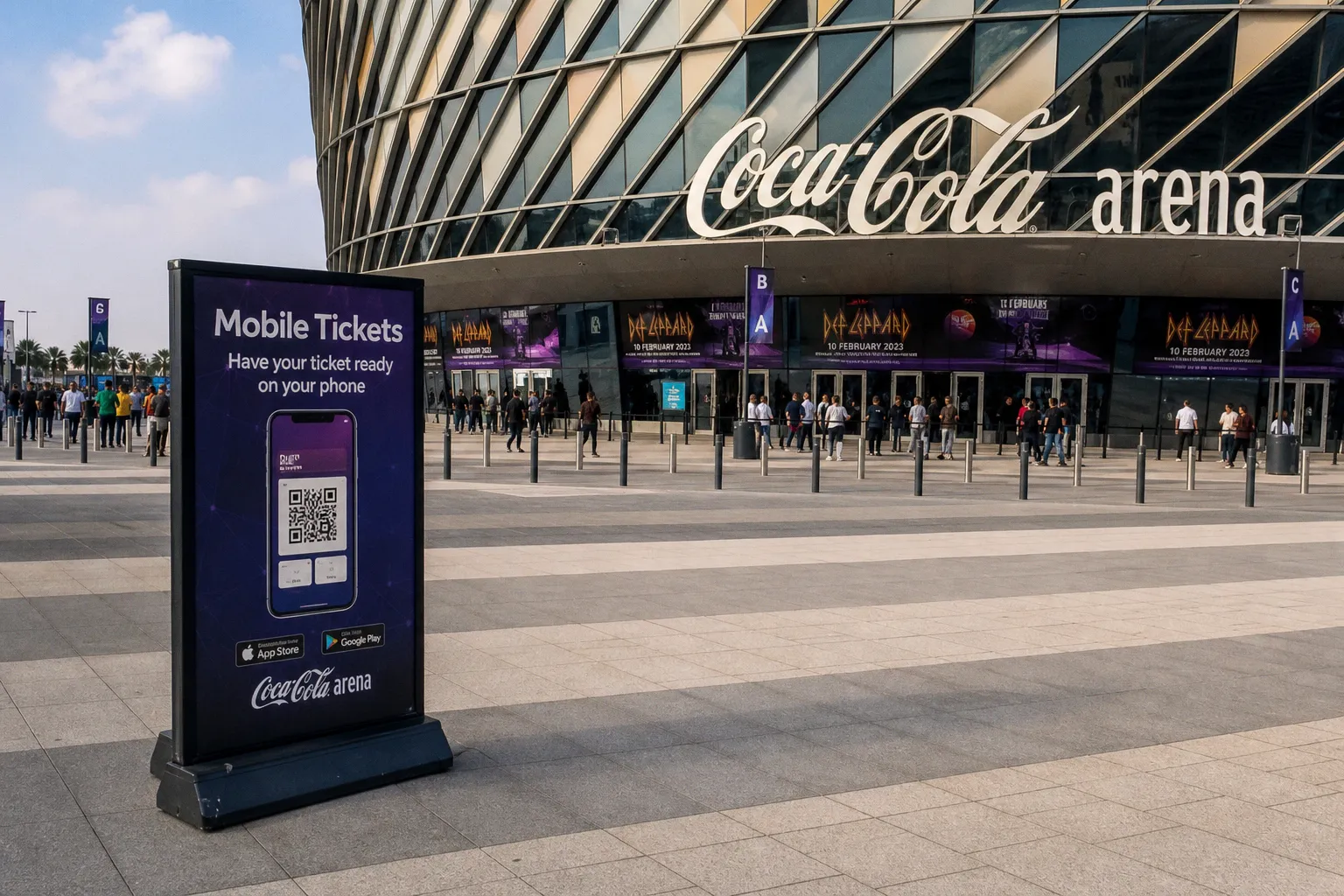
Web3 changes the equation. A blockchain-based event ticketing platform doesn't patch the old system. It replaces the trust model entirely: cryptographic verification at the gate, programmable rules baked into the asset, immutable ownership on a public ledger.
The QR code is dead. It just hasn't stopped moving yet.
The Centralized Database Is a Welcome Mat for Fraud
Traditional ticketing runs on a single point of failure: a centralized database. Every PDF, every barcode, every mobile ticket traces back to a server farm controlled by one operator. That server holds the master record of who bought what, where the seat sits, and whether the QR code scanned at the gate matches the one in the user's wallet.
Attackers only need to find one door.
Man-in-the-middle attacks intercept ticket data mid-transfer. Database breaches — and there have been dozens in the last decade — vacuum up millions of customer records, payment credentials, and active ticket hashes in a single sweep. Even worse, the QR code itself is a broadcast mechanism. Screenshot it. Forward it. Print it. The gate scanner has no way to know the difference between the original and the copy.
This is the yield management problem no platform wants to discuss. Fraud in a centralized model isn't accidental — it's a function of architecture. Legacy systems optimize for transaction throughput. A blockchain ticketing system flips that priority entirely.
| Attack vector | Legacy ticketing | Web3 event ticketing platform |
|---|---|---|
| Counterfeit ticket | Reproducible from leaked PDFs | Cryptographically impossible to duplicate |
| Database breach | Single point of failure exposes all | Decentralized ledger, no central honeypot |
| Scalper bot acquisition | Bots win on raw speed alone | Wallet/KYC gating, rate-limited mints |
| Resale manipulation | Platform enforces (or ignores) rules | Smart contract enforces code-level rules |
| Entry verification | Visual QR scan, easily spoofed | Cryptographic signature match on-chain |
| Ownership history | Opaque, siloed across vendors | 100% transparent on public ledger |
That last row is the one insiders keep coming back to. The QR code at the gate is a visual handshake. The blockchain signature is a mathematical handshake. One can be fooled. The other cannot.
Cryptographic Verification: Replacing QR Codes With Non-Fungible Assets
An NFT ticket isn't a file. It's an asset.
Stored in a non-custodial wallet — the user's own crypto wallet, not a company-controlled account — each ticket is a unique token bound to a specific blockchain address. The token carries metadata: event name, seat row, access tier, transfer history. Every entry is verifiable on-chain. No database to breach. No screenshot to forge.
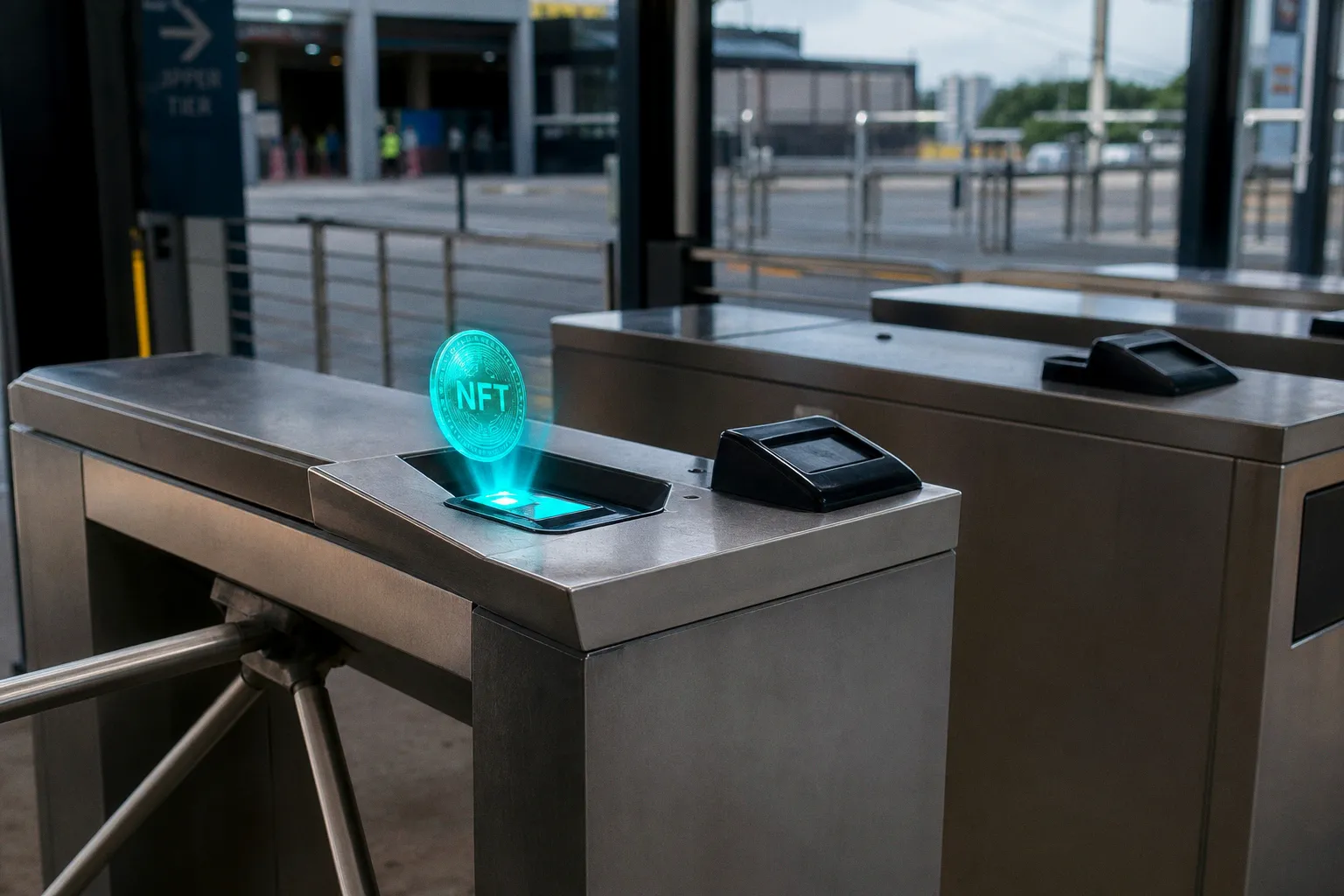
At the gate, scanners read the cryptographic signature against the public ledger. The signature either matches or it doesn't. There is no middle ground. Counterfeit tickets become functionally impossible — the chain rejects duplicates before they reach the turnstile. The near-zero counterfeit rate isn't marketing copy. It's math.
This is the core of NFT ticket fraud prevention: ownership is provable, transfer is traceable, duplication is mathematically infeasible. The ticket cannot be copied because the chain does not allow two tokens to claim the same identifier.
Smart contracts don't negotiate. They execute.
One caveat, because insiders know the limits: blockchain verification eliminates ticket forgery, but it doesn't make users immune to phishing attacks. Lose the wallet's private key to a spoofed site, and the ticket goes with it. The infrastructure is bulletproof. The user is still the soft target. Treat the wallet like the house keys to a stadium — same loss, same consequence.
Programmable Secondary Markets: The Scalper's Worst Nightmare
Scalper bots don't care about face value. They care about yield management. They vacuum up inventory at primary sale, then dump seats on the secondary market at 5x, 10x, sometimes 20x markup. The artist sees none of it. The fan gets fleeced. The platform takes a cut. This is the secondary ticket market on legacy rails — a predator's playground with no exit controls.
Smart contracts shut this down at the asset layer.
Programmable tickets — tokens governed by on-chain logic — enforce hard price ceilings. The contract refuses any resale above a defined threshold. No override. No manual approval. The code executes, the transaction settles, or it doesn't fire at all. This is smart contract ticket verification doing what customer service teams never could: enforcing secondary market rules in real time, on every flip, automatically.
The toolkit runs deeper than price caps:
1. Wallet-locked transfers — tickets move only between verified, KYC-cleared wallets, making bot-driven bulk acquisition economically irrational.
2. Time-windowed resale — secondary transfers open only during a defined window before the event, killing the early-cycle scalping arbitrage.
3. Tiered royalties — the contract splits revenue between organizer, artist, and venue on every resale, with percentages hardcoded into the asset.
4. Identity-bound tokens — POAP-style attendance credentials that unlock future drops only for wallets tied to verified identity.
The secondary ticket market doesn't disappear. It just stops being a free-for-all. Predatory scalping gets outbid by code that refuses to be outbid.
Beyond Entry: POAP and the Immutable Attendance Record
Scanning a ticket at the door used to mean one thing: access granted. Then the ticket became useless. The fan relationship ended at the turnstile.
Proof of Attendance Protocol (POAP) tokens extend that relationship indefinitely. Minted to a user's wallet at check-in, POAPs are verifiable, on-chain records proving the holder attended a specific event at a specific time. The token sits in the wallet permanently — a digital collectible pass, a credential, and a receipt in one. Since emerging in 2019, POAP has become the de facto attendance layer for festivals, conferences, and brand activations across Web3.
For brands and artists, POAPs unlock loyalty loops legacy systems cannot touch:
- Concert POAP holders get early access to the next tour's NFT presale.
- Multi-event attendees unlock VIP drops, backstage auctions, and limited merch windows.
- Festivals reward multi-year attendance with cumulative membership tiers.
- Sponsors target only wallets holding verified event POAPs — zero ad spend waste, zero fraud in the funnel.
This is the architecture of blockchain event passes done right: the ticket isn't the end of the engagement. It's the opening transaction of a multi-year loyalty relationship, provable on-chain and portable across platforms that integrate the standard.
Smart Royalties: The Revenue Stream the Labels Keep Quiet
Here's the part the industry doesn't want in the headline. When a ticket flips on the resale market, the artist almost never sees a cent. The promoter takes a cut. The platform takes a cut. The scalper pockets the delta. The creator gets nothing — and they were the reason the ticket had value in the first place.
Smart contracts fix that structurally.
Programmable royalty logic routes a percentage of every secondary sale — typically 5% to 10% — directly back to the event creator or artist wallet. The payment executes at the moment of resale, automatically, without intermediary negotiation. It works on the first resale. It works on the tenth resale. It works on every resale, forever, for as long as the contract runs. Settlement is instant. No 30-day waiting period. No chargebacks.
For touring musicians, this is not a rounding error. It's a structural revenue stream that compounds with demand. For festivals, it means the headliner's cut grows with secondary market activity instead of evaporating into scalper margins. The smart contract enforces the royalty because the royalty lives in the contract. There is no opt-out clause for bad-faith actors, no manual override, no "we'll get back to you."
Web3 ticketing technology turns the secondary market from a leak into a recurring channel. The artist finally gets paid twice — and every time after.
The Adoption Curve Has Already Bent
High-profile NFT ticketing drops are no longer experiments. They're operational. Coachella's lifetime pass issuance. NBA commemorative tickets for marquee games. Multiple European football clubs running membership tokens for gate access, merchandise, and voting rights. Conferences issuing POAPs as the primary attendance credential for speaker sessions. The stack has held up under live load, real crowds, real throughput.
The friction now isn't technical. It's institutional. Legacy platforms built their moats on data centralization and exclusive distribution contracts. Web3 ticketing platforms commoditize both. The moat drains the moment the venue scanner reads a cryptographic signature instead of a barcode.
So here's the question every legacy operator is quietly answering behind closed doors: when the gate scanner reads a math problem instead of a picture, and the artist's wallet collects royalty on every flip, and the fan walks out with a permanent attendance credential in their pocket — what exactly does the centralized database still own?
The QR code era didn't end with a bang. It ended with a signature.