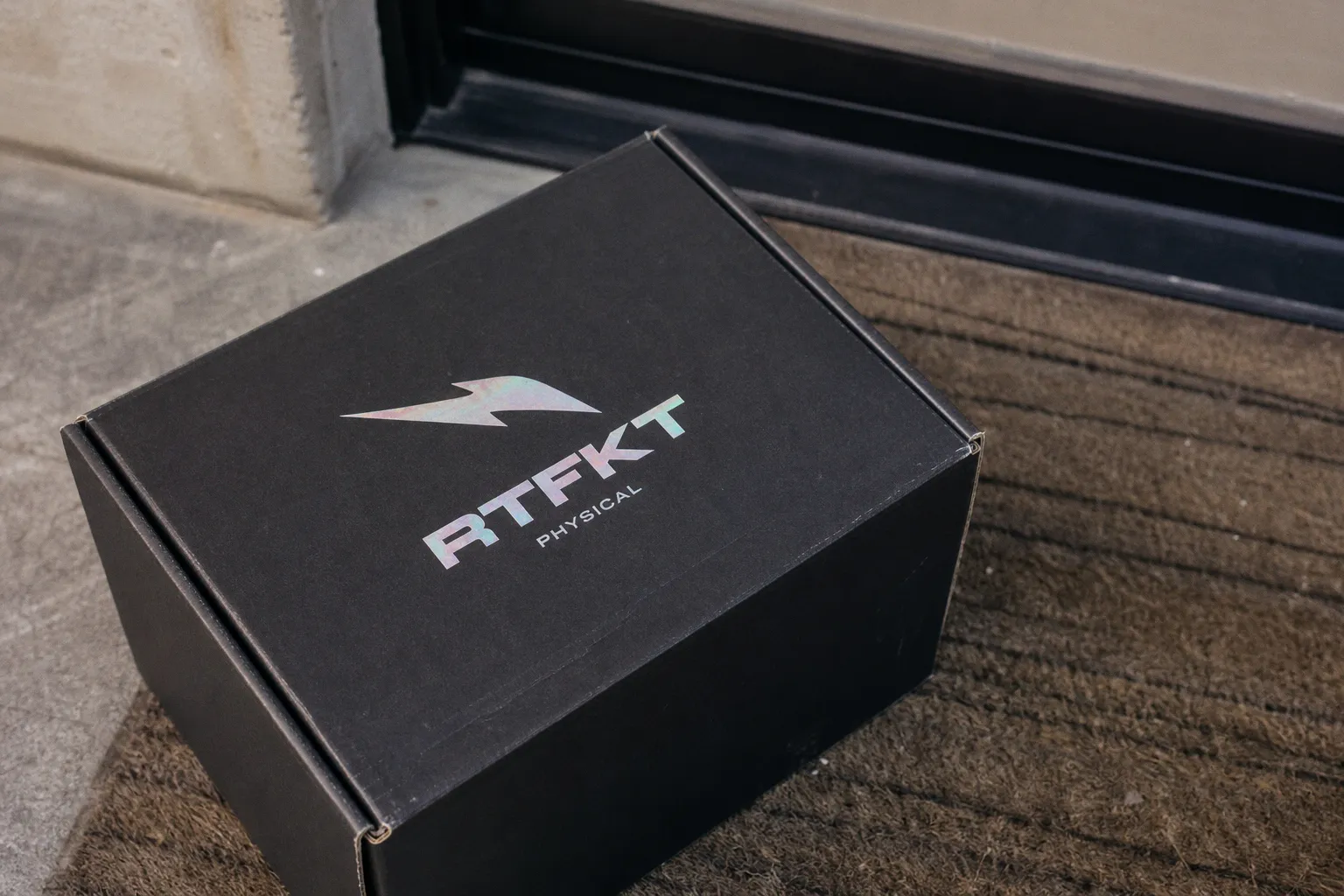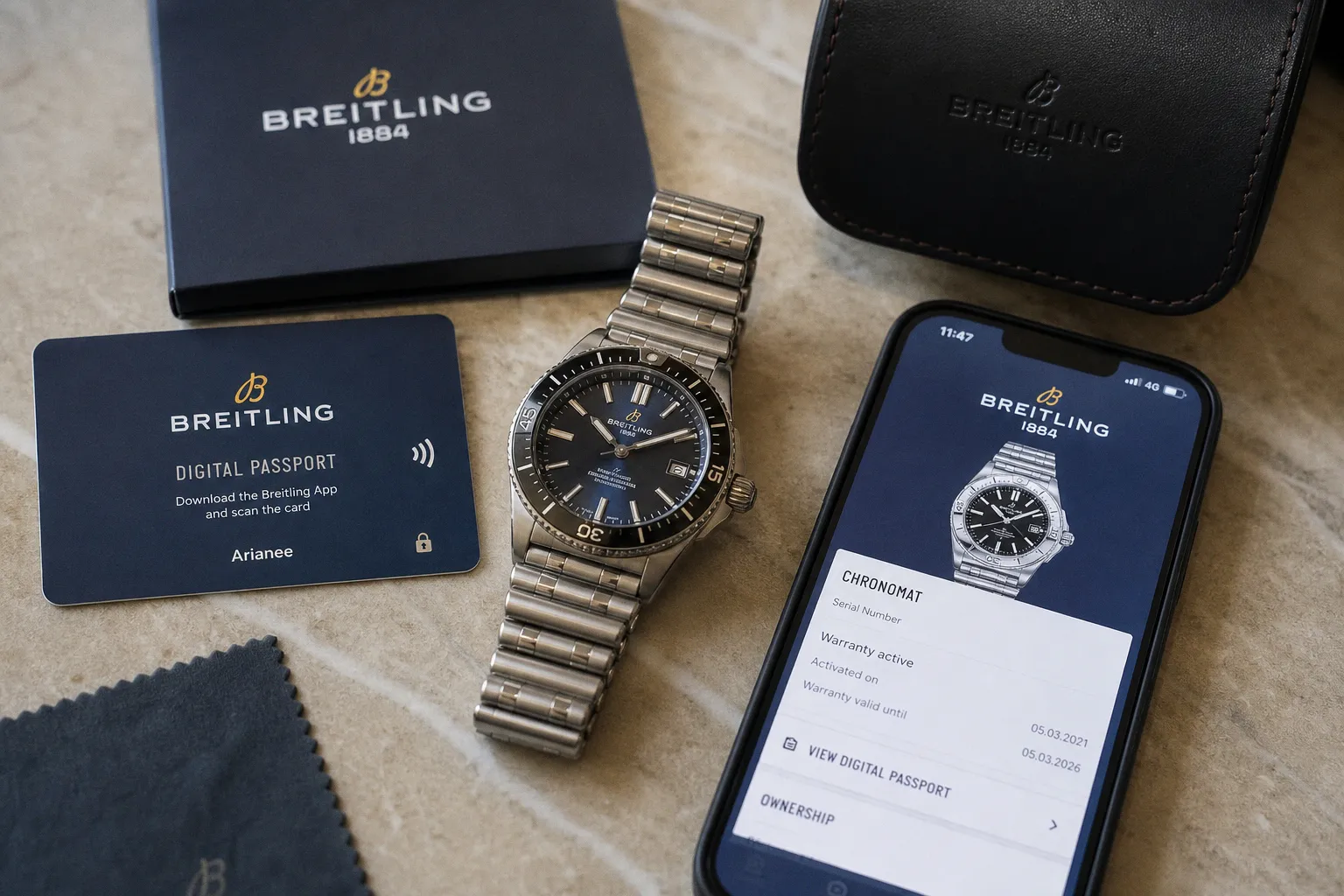
The brands that wired this up early — Nike via RTFKT, Prada, and a growing roster of houses that stopped treating phygital digital collectibles as a side experiment — are not dabbling. They are running a playbook, and the secondary market is starting to price it in.
The Mechanics of Phygital Authenticity: NFC and Blockchain Integration
The premise is brutally simple. A house mints a unique token on a blockchain. That token carries a serial number, a timestamp, a creator wallet, and a metadata payload — colorway, materials, edition size, manufacturing location. Then a Near Field Communication chip gets embedded in the physical item. Tap a phone. The chip resolves to the token. The token resolves to the manufacturer. The chain of custody is now mathematics, not paperwork.
That distinction matters. Paper certificates get photocopied. Tags get swapped. Serial numbers get re-stamped. But a token sitting on Ethereum or Polygon cannot be quietly duplicated without breaking the cryptographic link between chip and ledger. Match the chip to the on-chain record and the item clears. No match, no sale.
There are hard caveats. NFC tags can be cloned or physically transplanted if a counterfeiter gets prolonged access to a legitimate unit — the chip is only as secure as the manufacturing and distribution pipeline around it. A phygital system does not end counterfeiting. It raises the cost of counterfeiting, and it makes detection cheap and fast. That asymmetry is exactly what the brands are buying.
A digital twin is not magic. It is a tripwire — a fast, cheap way to separate the real from the replica before money changes hands.
The chip-plus-token combo is creeping well beyond haute couture. Sneaker drops, limited-edition watches, high-end cosmetics, and even event merchandise are getting the treatment. Anywhere a secondary market exists in 2025, authentication is a yield-management problem as much as a brand-protection one. The houses that solved it first now own a piece of infrastructure the laggards cannot buy off the shelf.
Digital Product Passports: Setting New Standards for Provenance
Brussels rewrote the rulebook. The EU's Ecodesign for Sustainable Products Regulation, finalized in 2024 and rolling out through 2025 and beyond, mandates Digital Product Passports for an expanding list of physical goods. A DPP is a machine-readable record of origin, material composition, repair history, ownership chain, and end-of-life instructions. For luxury, it is the cleanest possible provenance document — every stitch, every dye lot, every resale, all on the record.
The phygital token slots directly in as the DPP's anchor. Minted at production, it carries the passport. When the bag changes hands on the secondary market, the ownership field updates. When it gets serviced or repaired, that event is appended. When it is recycled or destroyed, the chain closes. No more folded paper cards in twelve languages that say "Authentic" without backing it up.
The operational lift is non-trivial. Brands have to integrate DPP issuance with PLM and ERP systems. They have to train retail staff. They have to design the consumer experience so that tapping a chip does not feel like auditing a supply chain. The brands that already figured this out — and it is a short list — now hold an asset the rest do not: a regulatory moat. DPP compliance, achieved almost by accident, is the kind of structural advantage that compounds.
This is not charity from Brussels. Counterfeit goods cost EU industries billions in lost sales and tax revenue every year. The DPP framework is, in part, an enforcement mechanism. The houses that treated their NFT experiments as one-off marketing stunts are now staring at a multi-year systems integration. The ones that built phygital rails early are, essentially, already compliant.
Redeemable Assets: Bridging Physical and Virtual Ownership
The phygital model runs in both directions. Buy the physical item, receive a digital twin — a wearable for an avatar, a membership token, an entry into a brand community. Or hold the token, and the token is redeemable: burn it, and the house ships the corresponding jacket, sneaker, or collectible.
This is where the terminology starts overlapping with the ticketing world. A redeemable NFT is structurally a digital coupon with scarcity mechanics bolted on. A brand mints 500 tokens, holds 100 back for surprise drops, distributes 200 to engaged community members, and routes 200 through the secondary market at whatever price clears. The chip and the DPP then authenticate the physical claim when the redemption fires.
RTFKT built its post-acquisition roadmap around this exact mechanic. The Nike-owned studio mints digital sneakers, some of which arrive with a physical counterpart shipped after the token is burned. Scarcity is enforced on-chain. Redemption is verified off-chain. The secondary market for unredeemed tokens trades at a discount to the physical edition — which is, in itself, a clean demonstration that the market already knows the difference between a brand digital collectibles asset and its physical twin.
Prada has run a more conservative version. Time-limited NFT collections grant access to physical events and limited-edition merchandise. The token is not the product. It is the receipt, the membership card, and the invitation, all stapled into one object.
A redeemable token turns scarcity into a programmable event. The brand stops selling a handbag and starts selling a handbag with a verifiable lifecycle — and pricing the lifecycle, not just the bag.
Luxury Market Impact: Combating Counterfeits and Enhancing Resale Value
The resale market for luxury is now larger, by some estimates, than the primary market for fast fashion. Platforms like The RealReal, Vestiaire Collective, and a constellation of brand-operated resale channels have turned secondhand into a primary revenue line. Resale runs on trust, and trust is exactly what phygital authentication supplies.
When a handbag arrives at a resale platform with a working chip that resolves to a clean on-chain history, the listing processes faster, prices more aggressively, and clears at a higher margin. The reverse is also true: an item that fails chip verification gets flagged, pulled, or destroyed. Authentication cost drops. Throughput rises. Unit economics flip in the brand's favor.
Several major houses have begun reserving their highest-trust resale channels for items that still carry a functioning digital twin. Older stock predating the phygital rollout routes through conventional authentication. Newer stock gets the fast lane. The implication for the secondary market is uncomfortable: the brands are about to own the authentication layer, and the platforms that cannot integrate will lose the listing.
How the mechanics actually compare:
| Parameter | Traditional Authentication | Phygital Authentication |
|---|---|---|
| Verification time | Days (physical inspection) | Seconds (chip tap) |
| Cost per item check | High (expert labor) | Marginal (network fee) |
| Counterfeit resistance | Reactive (detected post-sale) | Proactive (resolved pre-sale) |
| Ownership history | Paper-based, fragmented | On-chain, immutable |
| Resale price premium | Modest, brand-dependent | Measurable, rising |
| Compliance with EU DPP | Manual, partial | Native |
The resale premium is the lever brands watch most closely. A digital twin adds no raw materials to a handbag. It adds provenance, scarcity verification, and a clean ownership chain that a buyer is willing to pay up for. The exact multiplier varies by category, brand, and edition, and no published study has pinned down a single number. But the directional evidence — and the way platforms price phygital-authenticated stock against equivalent unverified items — points one way. Verified twins clear higher.
Extending Utility: From Physical Wearables to Metaverse Identity
The final layer is the one brands keep misreading. A digital twin is not a marketing asset. It is a portable identity object. The owner of a phygital sneaker can wear the sneaker to dinner and equip it on an avatar in a virtual space. The owner of a phygital jacket can display it in a digital wardrobe, rent it out for a virtual photoshoot, or carry it as a status object across multiple metaverse environments.
The interoperability question is still open. No single standard governs how a digital wearable moves between platforms. Some brands have built proprietary rendering pipelines. Others have leaned on open formats — GLB, GLTF — attached as metadata to the token and renderable in any compatible engine. The market has not settled on a winner, and that uncertainty is, paradoxically, part of the value. A token renderable anywhere is more durable than a token locked to a single platform.
For the buyer, the implication is straightforward. The phygital asset is no longer a thing. It is a credential. It unlocks event access, community membership, and digital experiences that pure-physical or pure-digital ownership cannot deliver on its own. The brand is selling a relationship, not a SKU.
That is also where the secondary market starts to look uncomfortably like the ticketing market. Scarcity, timing, and provenance drive price. Bots and snipers move in. Yield management becomes the dominant discipline. The operators that learned to run drops, manage floor prices, and police the secondary market on the concert and sports side are now applying the exact same playbook to brand digital collectibles. The terminology overlaps for a reason. The mechanics are identical.
What the Next Quarter Will Decide
The houses treating phygital as a side experiment are about to learn what happens when regulators, resellers, and customers all expect the chip to work. The brands that built the rails early — Nike, RTFKT, Prada, and a quietly expanding short list — are sitting on infrastructure competitors cannot replicate in a fiscal quarter. The counterfeiters will not vanish. They will adapt. But the cost of adaptation just went up, and the cost of detection just went down.
Here is the question every chief digital officer should be losing sleep over: when every product on the shelf carries a digital twin, and every resale clears through a brand-controlled authentication layer, who actually owns the customer — the marketplace, the platform, or the house that minted the token in the first place?