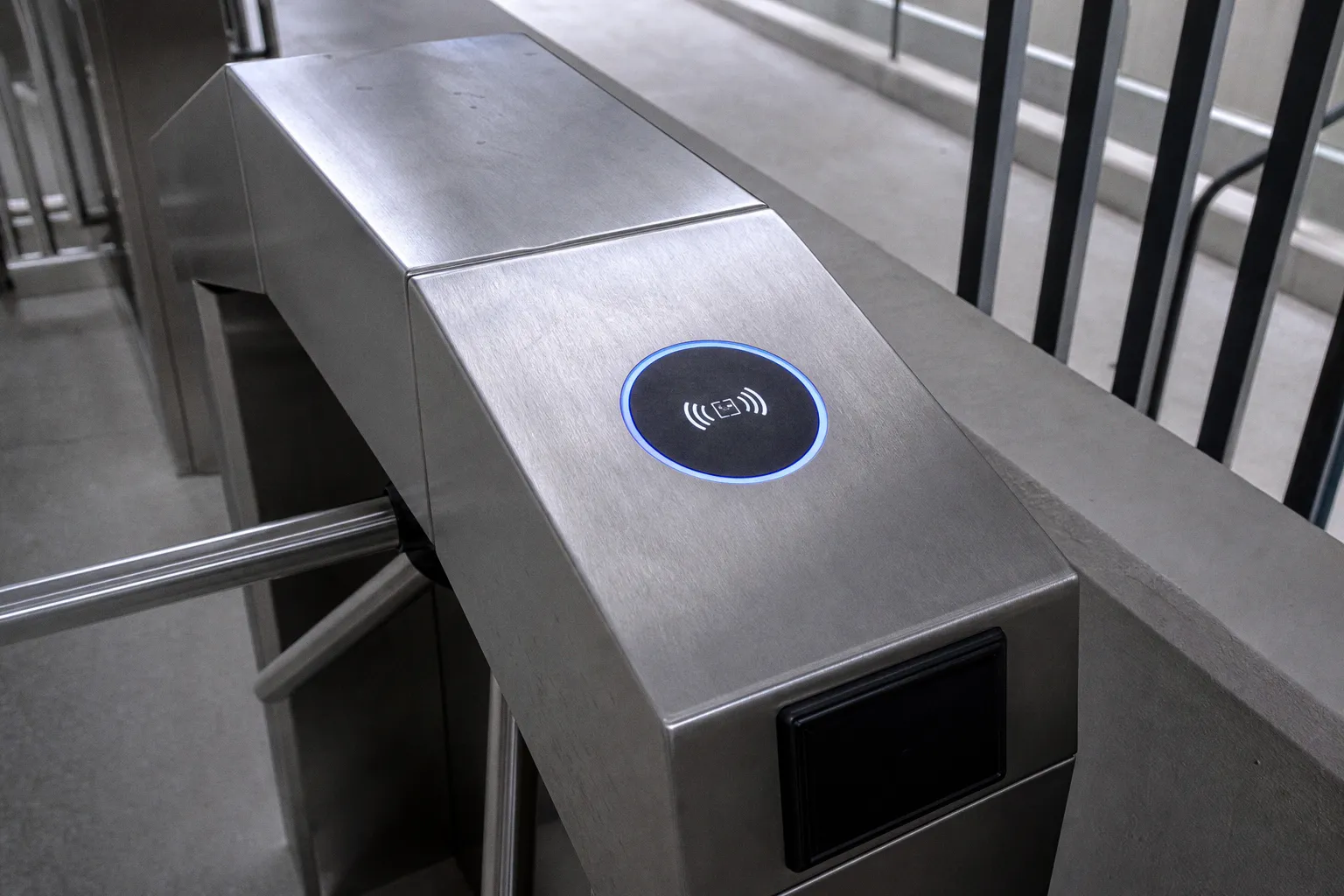
A branded NFT fails the moment it asks a customer to become a wallet technician. I have watched this happen in otherwise polished launches: a beautiful limited-edition sneaker, a bottle with an NFC chip hidden under its label, a ticket that promises backstage access—and then a jagged detour through seed phrases, network selection, and a transaction fee the brand did not bother to explain.
That is not “Web3 education.” It is a broken retail experience.
The useful web3 wallet list for brands is therefore not a ranking of crypto products in the abstract. It is a shortlist of infrastructure that can disappear into the brand experience while preserving the parts that matter: supply chain provenance, collectible ownership, entitlement logic, recovery when a customer loses access, and a clean route from a physical object to a digital privilege.
I examined the current product architecture offered by Privy, Magic, Crossmint, Coinbase Developer Platform, and thirdweb through that lens. They do not solve the same problem. Treating them as interchangeable is how a membership program becomes an expensive login screen.
The best brand wallet is not the one that looks most “onchain.” It is the one the customer barely notices until it unlocks something real.
Embedded wallet providers: the interface should feel like the brand, not a protocol
For most consumer-facing loyalty programs, the wallet should arrive after the customer has already done something they understand: entered an email address, authenticated with a social account, scanned an NFC chip, registered a ticket, or completed a purchase.
Embedded wallets are designed for that choreography. The wallet exists inside a branded application rather than forcing the user into a separate browser extension or an unfamiliar app-store download. This is the category where Privy and Magic have become especially relevant to enterprise web3 wallets.
Privy: flexible wallet creation for brands with more than one audience
Privy’s appeal is its ability to accommodate both the crypto-native customer and the person who has never seen a public address. It supports embedded wallets alongside external wallets, meaning a brand can let an existing wallet holder connect their preferred account while quietly provisioning a new wallet for everyone else.
Its embedded wallets work across more than 50 blockchains, according to the platform’s documentation. That reach is useful for a brand with a fragmented campaign calendar: a collectible activation on an EVM chain, a Solana-based community experiment, and no appetite for making the customer understand why those systems differ.
The more material decision lies in wallet-creation rules. Privy can create Ethereum and Solana embedded wallets during login, but it does not have to do so for every user. Its configuration includes three modes:
1. All users — every authenticated customer receives an embedded wallet. This is appropriate when the token is integral to the product registration or loyalty experience.
2. Users without wallets — customers who already bring an external wallet are not issued another one. This is a tactful compromise for a fashion, gaming, or collector audience with meaningful wallet literacy.
3. Off — wallet creation waits for a later trigger. I prefer this for brands that want to build a conventional account relationship first and mint only when a customer earns, buys, or claims an asset.
That last mode has more aesthetic discipline than it may seem. Not every email signup deserves a token. A wallet should appear at the moment of tangible utility: when an NFC-enabled garment is authenticated, when a member reaches a meaningful tier, when an event guest claims a credential, or when a product’s provenance record becomes relevant.
Privy also allows users to export keys for self-custody. That is an important distinction. It gives a program a path from frictionless onboarding toward customer-controlled ownership without forcing that decision at the entrance. But it also means the brand must decide what happens when a customer moves from an embedded environment into a self-custodied one: how access is recognized, how customer support verifies identity, and whether a transferred token continues to carry the same benefits.
Magic: a cleaner proposition for passwordless onboarding
Magic approaches the embedded-wallet experience with a more singular proposition: passwordless authentication provisions a non-custodial wallet automatically. The supported login menu includes email one-time passwords, SMS, and social sign-in. Magic lists support for more than 30 blockchain networks, including Ethereum, Polygon, Solana, and Bitcoin.
For a brand manager, the distinction between custodial and non-custodial should not be treated as a piece of technical fine print. It determines the emotional contract of the program.
With a non-custodial embedded wallet, the customer retains a stronger claim to control of the asset. That is attractive when the NFT is intended to feel like a real collectible—a digital counterpart to a numbered watch, a museum edition, a heritage garment, or a limited product with a long afterlife. It better supports the idea that the token belongs to the holder rather than merely being displayed inside a brand account.
But control has texture. Recovery, device migration, account changes, and customer support need to be designed with the same care as the packaging. A brand cannot call an NFT “your passport for life” if changing an email address turns that passport into a support ticket.
Here is how I would separate Privy and Magic in a typical web3 wallet comparison:
| Product consideration | Privy | Magic |
|---|---|---|
| Core posture | Embedded and external-wallet support in one identity layer | Passwordless authentication with automatically provisioned non-custodial embedded wallets |
| Wallet creation | Configurable: all users, users without wallets, or delayed | Provisioned automatically after authentication |
| Useful brand scenario | A program serving both existing wallet users and mainstream customers | A polished membership or collectible flow where ownership should feel native to the account |
| Chain breadth stated by provider | 50+ blockchains for embedded wallets | 30+ networks, including Ethereum, Polygon, Solana, and Bitcoin |
| Critical design question | When should a wallet be created, and can users export keys? | How will recovery and long-term account continuity be handled? |
Neither is universally among the “best web3 wallets for brands” because neither is really a wallet in isolation. Both are pieces of customer identity infrastructure. The deciding factor is whether the brand wants the customer relationship to begin with a wallet, a login, or a physical interaction that quietly produces both.
Checkout infrastructure: Crossmint and the art of not making checkout feel like blockchain
If embedded wallets solve the identity entrance, Crossmint addresses the moment where a customer actually acquires something. This may be a paid NFT, a tokenized product passport attached to a physical purchase, a digital membership, or an event credential with a premium tier.
Crossmint can deliver an NFT to an email address by automatically creating an MPC-backed custodial wallet for that address. Its minting API can also work from an application-specific user identifier, creating a custodial wallet if there is no wallet already associated with that customer.
For brands, that is a refreshingly direct premise: sell or issue the asset to the person, not to a hexadecimal string they were expected to bring with them.
The platform’s Checkout supports debit cards, credit cards, Apple Pay, Google Pay, stablecoins, and different integration formats: hosted, embedded, and headless. Those modes are not merely implementation preferences. They are choices about where the brand is willing to surrender control of the experience.
- Hosted checkout is the fastest route to a functioning purchase flow. It suits a limited drop where the physical product, the story, and the inventory mechanics already demand attention.
- Embedded checkout keeps the customer in the brand environment while relying on prebuilt payment machinery. For many commerce teams, this is the sensible middle.
- Headless checkout is for brands that care about every visual and operational detail: bespoke ticketing flows, in-store kiosks, native mobile apps, or campaigns where the checkout must match an existing CRM and commerce stack. Crossmint explicitly identifies ticketing solutions as a headless use case.
I find Crossmint most persuasive when the NFT is not positioned as the object of desire by itself. Consider a members-only concert series. The customer buys a ticket with Apple Pay, receives a digital credential in a wallet attached to their email address, and later taps an NFC-enabled wristband or scans a QR code at entry. The wallet is infrastructure. The ticket, the access, and the feeling of being recognized are the product.
That approach also makes custodial wallet integration attractive for a category of brands that should be skeptical of the usual “ownership” rhetoric. A hospitality group, for example, may want a tokenized membership record that grants room upgrades, dining invitations, and access to a private booking window. Its customer does not necessarily want to manage private keys. They want their status to be remembered at the door.
Still, a custodial wallet is not an empty implementation detail. The brand must understand who controls the keys, what recovery path exists, how the account can be migrated, what happens if a user changes their email, and whether the asset can later move beyond the program. A custodial experience can be elegant; it should never be vague.
In loyalty, custody is not a philosophical argument. It is a decision about who can restore access at 11 p.m. when a guest is standing outside the venue.
Smart accounts: where membership logic becomes programmable
Embedded wallets and checkout flows make token issuance approachable. Smart accounts decide what happens after issuance, especially when the brand wants to absorb transaction friction or combine several actions into one customer gesture.
Coinbase Developer Platform’s Smart Accounts use ERC-4337 account abstraction. The phrase sounds like architecture-speak, but its practical value is easy to recognize: an account can batch multiple calls and can use optional gas sponsorship through a paymaster. CDP documents deployment across eight mainnets and two testnets on EVM chains.
For a brand NFT program, batching can turn a clumsy sequence into one clean action. A customer might accept membership terms, mint a credential, register a product serial number, and receive a claimable event perk within one signed interaction. The customer does not need to watch four different transaction prompts assemble themselves into a conclusion.
Gas sponsorship is equally material. No brand should market a reward as free and then quietly place a blockchain cost in front of the customer. The transaction is not gas-free; the cost still exists. The question is whether the customer pays it in a confusing moment, or whether the brand sponsors it as part of the service.
CDP’s Paymaster applies to ERC-4337 smart accounts rather than conventional externally owned accounts. Its policy controls can include contract allowlists, per-user limits, and global spending caps. Native Paymaster support is documented for Base Mainnet and Base Sepolia.
That policy layer is where adult operational design begins. A brand can decide, for example:
- Sponsor the first membership mint but not repeated transfers.
- Sponsor redemption transactions only for contracts tied to an active campaign.
- Cap sponsored actions per user during a ticket claim window.
- Allow gas coverage for a verified product-registration contract while excluding arbitrary interactions.
Thirdweb offers a similarly useful proposition for in-app wallets configured as smart accounts: it can sponsor all transaction gas, subject to policies. Those policies can limit spending globally or constrain sponsorship by chain, contract, wallet, or a custom server-side verifier.
I would not frame this as a race to make blockchain invisible at any cost. In some categories, a visible transaction can reinforce collectibility. A serious collector buying a numbered digital edition may appreciate the provenance trail and the moment of finality. But a customer claiming a birthday reward from a cosmetics brand does not need ceremony. They need the reward to arrive.
The line is simple: show the chain when it adds cultural cachet or evidence of authenticity. Hide the chain when it interrupts a mundane action that the brand has already promised to make easy.
ERC-721 versus ERC-1155: the token format should follow the object
Token standards are often chosen by habit. Someone says “NFT,” the team defaults to ERC-721, and a product architecture gets locked before anyone has asked what is actually being issued.
ERC-721 is the standard interface for individually distinguishable NFTs. It makes intuitive sense for a singular object: a numbered collectible, an authenticated handbag, a one-off artist collaboration, a premium membership credential with a unique identity.
ERC-1155 is more elastic. One contract can manage fungible, non-fungible, and semi-fungible token types. It also supports batch transfers, which can reduce transaction costs when multiple token types move together.
That flexibility changes the economics and the experience of a loyalty system. A brand might issue a unique founder credential, a series of limited event badges, and a replenishable inventory of reward vouchers from a single ERC-1155 contract design. It is particularly suited to programs that mix durable status with repeatable benefits.
| Brand asset or use case | Usually the stronger starting point | Why |
|---|---|---|
| A one-of-one provenance certificate for a luxury object | ERC-721 | The relationship is singular: one physical object, one distinct digital record |
| A numbered annual membership credential | ERC-721 or ERC-1155 | Use ERC-721 when uniqueness is central; use ERC-1155 when tiers and editions must be managed at scale |
| A festival pass plus drink credits and merchandise claims | ERC-1155 | Multiple asset types and batch operations suit a layered access package |
| A recurring loyalty reward or redeemable benefit | ERC-1155 | Semi-fungible logic can be more natural than creating a distinct collectible for every redemption |
| A limited campaign collectible attached to a product scan | Depends on transfer and edition policy | The question is whether the object is a unique passport or one edition among many |
The standard does not guarantee interoperability, marketplace support, cross-chain portability, or a particular wallet experience. It defines an interface. The actual result depends on the chain, wallet, indexer, application, bridge, and redemption layer surrounding it.
That may sound like a qualification, but it is the entire job. A brand’s token is only as coherent as the system that recognizes it. If a membership NFT renders beautifully in one wallet but cannot be read by the event scanner, imported into the customer service system, or reconciled with the commerce account, then the token is decoration rather than infrastructure.
Choosing the integration model: start with the moment of access
The most useful way to organize a web3 wallet list is by the customer moment the wallet needs to serve. Not “Which provider has the most chains?” Not “Which dashboard looks most enterprise?” Start with the access moment.
I use five questions when assessing a brand deployment.
1. Is the token discovered through a physical object or through a screen?
An NFC chip in a jacket label, a bottle cap, a watch box, or an event wristband creates a very different relationship from an NFT purchased on a landing page. Physical-to-digital products need a low-friction claim path, a way to connect the scan to a customer identity, and a defensible model for duplicate claims or ownership transfers.
The NFC chip itself is not magic. It can help anchor an interaction to a physical item, but it does not automatically establish a perfect supply chain provenance record. The credibility comes from how the chip, product serialisation, backend database, contract rules, and redemption logic agree with one another.
For these programs, an email-first embedded or custodial flow is often more appropriate than expecting a customer to connect an external wallet at the point of scan.
2. Does the brand need a customer-controlled collectible or a managed entitlement?
This is the custody question in its proper form.
A collectible with resale relevance, a heritage story, or a sense of personal possession benefits from a path toward self-custody. Embedded wallet providers such as Privy and Magic can make that path less abrupt, though their models differ.
A managed entitlement—hotel access, a ticket claim, a loyalty benefit, a private shopping appointment—may be better served by custodial wallet integration if it reduces support burdens and improves recovery. The customer is not necessarily asking for a vault. They are asking for a reliable credential.
3. Must the customer pay with ordinary payment methods?
If the answer is yes, payment design cannot be an afterthought. Crossmint is compelling where credit cards, debit cards, Apple Pay, Google Pay, and stablecoins need to sit inside the same acquisition path.
The best experience is usually one in which the customer does not have to translate between the brand’s commerce vocabulary and crypto vocabulary. They buy. They receive. They access. If a wallet is created, it is created because the program needs it—not because the infrastructure provider wants a demonstration of wallet creation.
4. How often will the customer need to transact?
A token that is minted once and displayed occasionally has different needs from an active program with ticket transfers, reward claims, scans, upgrades, and benefit redemptions.
This is where smart accounts and controlled sponsorship earn their place. Repeated interaction is exactly where small moments of transaction friction become intolerable. Account abstraction can streamline those moments; paymaster policies can keep the brand’s gas exposure bounded and intentional.
5. What is the cost of a failed recovery?
This is the question teams postpone because it is less glamorous than minting. It is also the one customers remember.
If a customer loses access to a wallet holding a concert credential, can they still enter? If they change their email after registering a high-value product, can the provenance record follow them? If an embedded account becomes inaccessible, can support restore access without exposing the system to fraud?
No NFT alone solves ticket fraud, unauthorized resale, account sharing, or duplicate entry. Those outcomes depend on contract rules, wallet recovery policies, identity checks, transfer settings, scanner design, and the off-chain access-control system. The wallet layer is only one component, though it is often the component the customer touches first.
My verdict: build for continuity, not for the launch-day screenshot
The enduring brand use cases will not be the ones that boast about having issued NFTs. They will be the ones where the token becomes a quiet but valuable part of product ownership: a verified repair history, a members’ invitation, an event credential that survives a device upgrade, a collectible whose provenance feels as considered as its physical counterpart.
For a flexible embedded-wallet layer that can accommodate both newcomers and external-wallet users, Privy deserves close attention. For a passwordless, non-custodial embedded experience, Magic has a clean and credible place. For fiat-to-NFT acquisition and email-address delivery, Crossmint is built around the commerce problem many brands actually have. For sophisticated transaction logic and sponsored interactions, Coinbase Developer Platform and thirdweb bring smart-account infrastructure into practical view.
But the provider is not the product. The product is the moment a customer taps an NFC chip, checks into an event, opens a package, or realizes that a purchase has earned them access to something they genuinely value.
That is the standard I would use. A wallet layer has market longevity when it protects that moment from technical noise—and gives the token enough tangible utility to remain meaningful after the campaign’s visual language has faded.