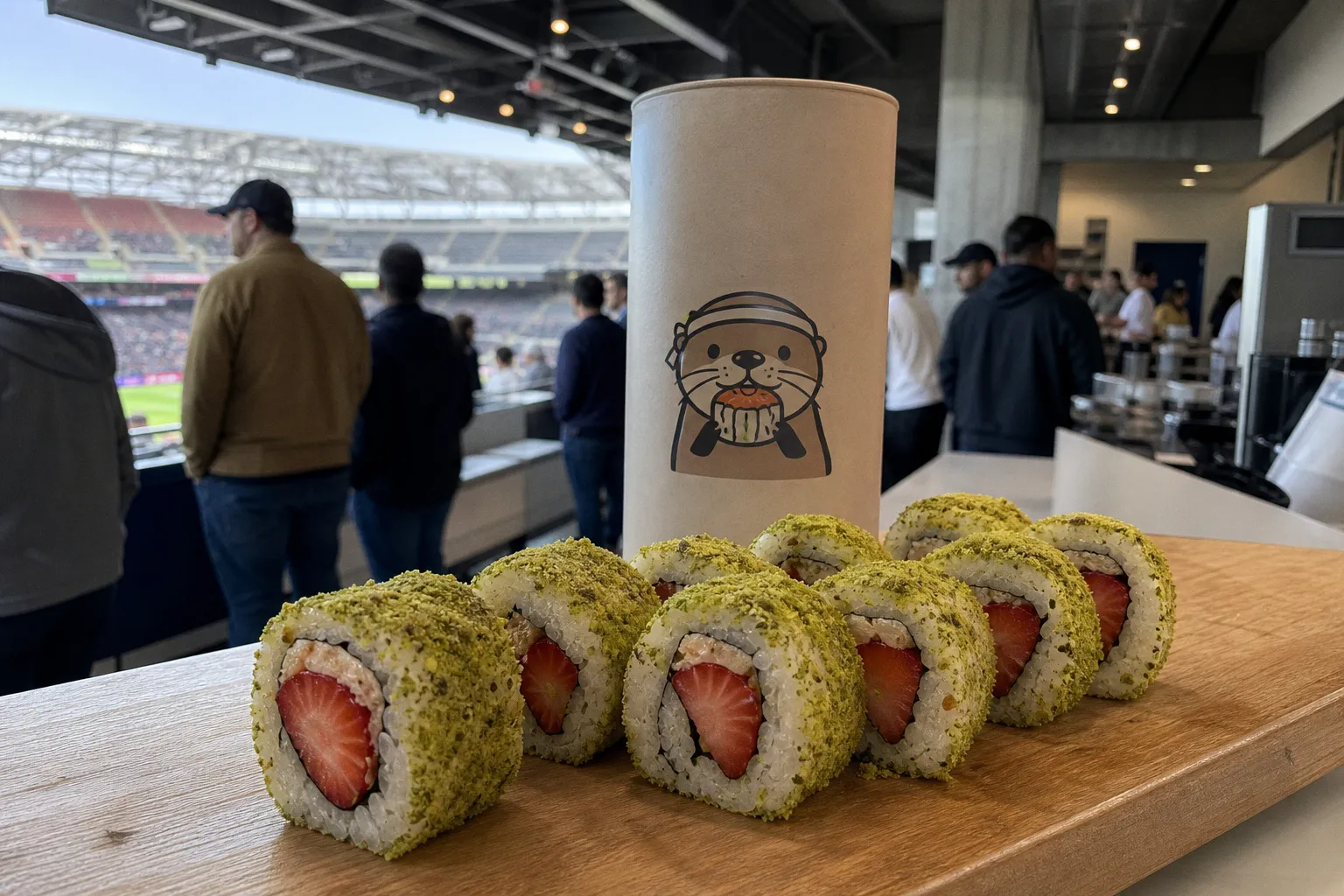
Wimbledon 2026 now operates as a brand launch surface. "Game, Set, Match-a Sushi Pop" — a strawberries-and-cream dessert sushi concept tied exclusively to the tournament — converts a fortnight of tennis into a finite innovation window for premium food activation. The mechanics parallel tokenized event utility: fixed supply, cultural anchor, and a deadline embedded in the experience itself. For brands tracking experiential infrastructure, the launch is worth examining on its own terms.
Product mechanics
The product, reported by InsightTrendsWorld, reframes Wimbledon's strawberries-and-cream tradition into a hybrid dessert format. Distribution runs through a limited delivery radius rather than a permanent menu slot. The constraint is structural, not cosmetic. The product exists only as long as the tournament does, and that time-bounded availability is the load-bearing element. It converts a snack into a participation token: consumers either engage inside the window or miss it entirely. By design, the launch deploys limited-edition scarcity to drive urgency, trial, and shareable social content. The narrower delivery zone also functions as a demand-testing mechanism — brands can validate consumer response locally before committing to wider rollout.
Scarcity and engagement architecture
InsightTrendsWorld frames the broader shift: brands are moving past logo sponsorship toward products consumers can taste, share, and experience. The architecture rests on three inputs — event exclusivity, finite supply, and cultural alignment with a recognized occasion. Novelty drives engagement. Hybrid formats combining familiar flavors with unexpected presentations satisfy curiosity while lifting perceived premium value. Each input maps to parameters familiar from NFT ticketing and event-membership drops: bounded supply, utility window, cultural relevance as demand catalyst. Event-inspired product development, according to the same source, is now expanding beyond sponsorship into the product layer itself.
For related context, see Morpho Raises $175M to Expand Decentralized Lending Infrastructure.
For related context, see Animoca Brands Secures Dubai Crypto License for Institutional Services.
Ipsos CX Global Insights 2026 corroborates the demand-side logic. Its framework identifies "design memorable moments" and "recognize and elevate customers with exclusive, differentiated benefits" as quantifiable NPS drivers — both directly satisfied by an event-exclusive consumable. The baseline metric from Ipsos: 70% of customers choose brands based on expected experience quality. The dessert sushi launch effectively tests whether a novel, event-bound format can carry that experiential weight.
Viability assessment
The event-as-platform model has measurable inputs. Conversion inside the utility window. Post-event repeat intent. Any secondary signal around memorabilia tied to the activation. Supply is bounded, the cultural anchor is pre-existing, and the engagement surface is large. The architecture is sound. Whether the format scales beyond novelty depends on whether post-tournament demand justifies a permanent SKU or fades with the closing weekend. As a template for time-bound, experience-driven brand utility, the mechanics are clean. The open variable is portability: whether the pattern transfers intact to other categories, other event types, and other cultural anchors.